Introduction to Embedded Systems
Embedded systems are an integral part of our daily lives, though they often operate in the background, unnoticed. They are specialized computing systems designed to perform dedicated tasks with specific functions. Unlike general-purpose computers, embedded systems are designed for a single purpose or a set of tasks. They are typically composed of a processor, memory, and software that work together to execute predefined functions. Common examples of embedded systems include household appliances, cars, medical devices, and smartphones.
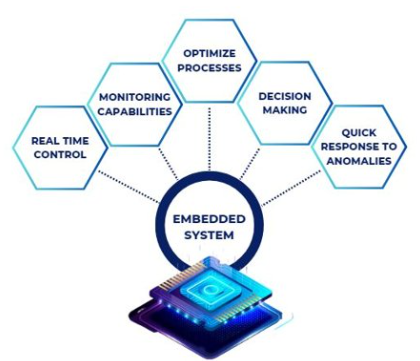
The primary characteristic of embedded systems is their integration within a larger system. For instance, an embedded system in a car could be responsible for controlling the air conditioning, tracking the car’s speed, or managing the safety features. These systems are designed to be reliable, efficient, and real-time, meaning they respond to inputs in a predictable manner within a specific time frame.
Components of Embedded Systems
An embedded system typically consists of four primary components: the processor, memory, input/output devices, and software. Let’s take a closer look at each:
Processor: The processor is the brain of the embedded system, responsible for executing instructions. It could be a microcontroller or a microprocessor, depending on the system’s complexity. Microcontrollers are more commonly used due to their compact size and power efficiency.
Memory: Memory stores the programs and data required by the system. Embedded systems often use both ROM (Read-Only Memory) for storing firmware and RAM (Random Access Memory) for temporary storage during operation.
Input/Output Devices: These devices allow the embedded system to interact with the outside world. Input devices could include sensors, while output devices could include displays, motors, or alarms.
Software: The software is the code that runs on the embedded system, enabling it to perform its specific tasks. The software is typically stored in non-volatile memory like Flash or EEPROM and is often written in languages like C or C++.
Applications of Embedded Systems
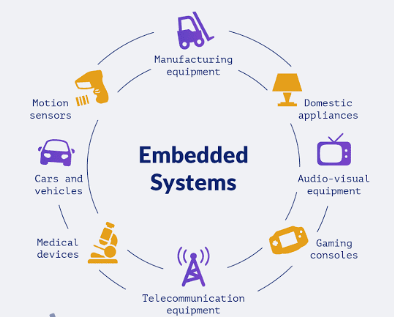
Embedded systems are used in a wide range of applications across various industries. Here are some key areas where embedded systems have a significant impact:
Consumer Electronics: Many modern consumer electronics, such as smart TVs, washing machines, and microwave ovens, use embedded systems to manage their functions.
Automotive: In cars, embedded systems are used for functions such as controlling airbags, ABS (Anti-lock Braking Systems), engine control, and infotainment systems.
Healthcare: Medical devices like pacemakers, infusion pumps, and medical imaging systems rely on embedded systems to ensure precision and reliability in critical environments.
Industrial Automation: Embedded systems are employed in factories and plants to control machines, sensors, and other industrial processes, enhancing efficiency and safety.
Smart Devices: With the rise of IoT (Internet of Things), embedded systems play a pivotal role in smart home devices, including thermostats, security cameras, and voice assistants like Amazon Alexa and Google Home.
Advantages of Embedded Systems
Embedded systems offer several advantages that make them ideal for a wide range of applications. Some of the key benefits include:
Efficiency: Because embedded systems are designed for a specific task, they are highly optimized for performance and energy efficiency. This ensures that they can deliver fast and reliable results without using excessive resources.
Cost-Effective: Since embedded systems are often built with low-cost components and focus on performing a single function, they tend to be less expensive to manufacture than general-purpose computing systems.
Real-Time Operation: Embedded systems are often required to operate in real-time. This means that they must respond to inputs within a strict time limit, ensuring that the system can function safely and predictably.
Size and Portability: Embedded systems are typically compact, making them suitable for integration into small devices. This feature allows for greater portability and integration into various products.
Challenges of Embedded Systems
Despite the many benefits, there are some challenges associated with embedded systems:
Complexity: As embedded systems become more advanced, their design and programming can become increasingly complex. This requires specialized skills and knowledge from engineers and developers.
Security: Since embedded systems are often connected to the internet (as seen in IoT applications), they can be vulnerable to cyber-attacks. Securing these systems is critical to ensuring their reliability and safety.
Upgrades and Maintenance: Unlike traditional computers, embedded systems are not easily upgradable. Once they are deployed, updating or repairing them can be challenging, especially in remote or difficult-to-reach environments.